
What are your rights if your checked luggage is lost, delayed or damaged by the airline?
What should you do if your checked-in luggage is delayed, damaged or fails to arrive? Baggage issues are a common occurrence when travelling by air. Read on to find out what your rights are, when you can claim compensation under the Montreal Convention and what you need to bear in mind regarding your hand luggage.
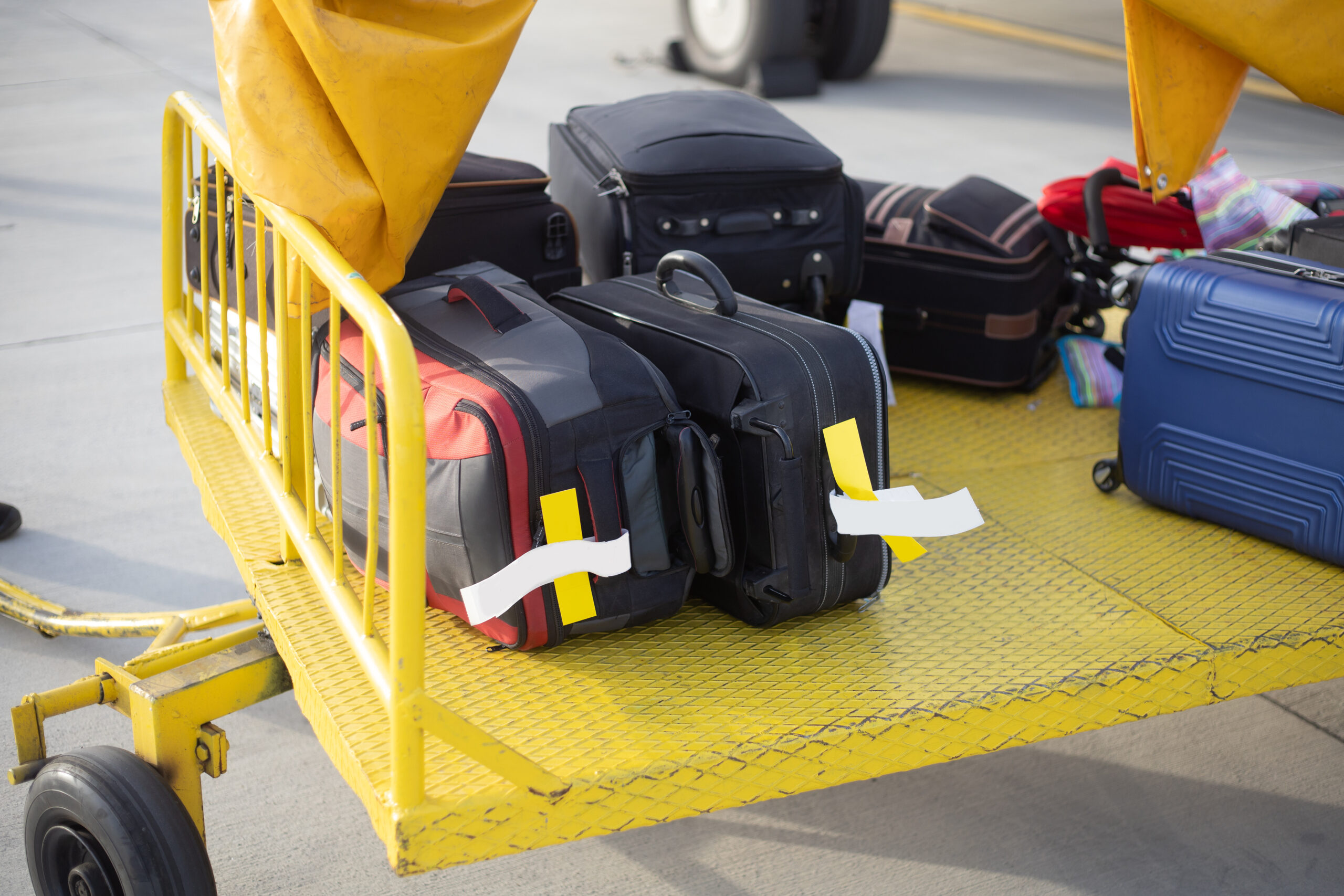
What should I do if my checked-in suitcase is damaged or does not arrive?
The Montreal Convention (MC) usually governs claims by passengers against the airline in the event of delay, loss or damage to luggage.
It is important to know that: The Convention sets a maximum liability limit. This limit was increased on 28 December 2024. Since then, airlines have been liable for the destruction, loss, damage or delay of luggage up to 1,519 Special Drawing Rights (SDRs) per person, which is currently equivalent to approximately €1,900.
Please note that compensation is only paid for damaged or lost items. If replacement purchases are necessary, these must also be reimbursed. However, experience shows that the amounts actually paid out are often lower than the claims made. Furthermore, passengers must provide evidence of the damage, which is often insufficient.
Remember the deadlines regarding airline baggage
If you discover upon arrival that your luggage is damaged or missing, you must report it immediately at the airline’s baggage counter, i.e. while you are still at the airport. This is done using a Property Irregularity Report (PIR). It is important to do this because it is the only way to prove that the airline is responsible for the issue with your luggage.
In addition to the PIR, you must contact the airline again in writing and request compensation for the damage if you wish to safeguard your rights.
Important information:
- Damaged checked-in luggage: You have up to 7 days to claim compensation from the airline for the damage. The amount of compensation is based on the current value of your luggage and not the purchase price or the cost of replacing it.
- Delayed checked-in luggage: Once you have received your luggage, you must contact the airline within 21 days to claim reimbursement for any replacement items you have purchased. If you miss this deadline, your claim will lapse.
- If you have not received your luggage within 21 days, it is legally considered lost. You can then claim the value of the suitcase and its contents. Unlike with damaged or delayed luggage, there is no short reporting deadline for this.
However, if your suitcase does arrive after 21 days and you have already requested payment from the airline, they will refuse it.
You will find an overview of the contact forms for European airlines on our website.
Package travellers should also report any problems with their luggage to the tour operator. A missing suitcase on holiday is grounds for a price reduction. However, if the airline pays, this claim is reduced.
If the airline does not pay compensation, a claim against the airline can only be made within 2 years. The period starts when the plane lands.
If you have a baggage insurance, contact your insurance company immediately.
Our sample letters can help
Use our sample letters for delayed, lost or damaged luggage to make a claim directly with the airline.
Take precautions
- Before you travel, make a list of all the items in your checked baggage (if possible, keep old receipts, especially for more expensive items).
- Photograph the contents of your baggage.
- Label your luggage. Put contact details where you can be reached in the near future on your luggage.
- Keep your checked baggage tag in a safe place.
Is your checked luggage delayed? This is what is meant by emergency purchases
If your luggage does not arrive, you can buy replacement clothing and everyday essentials. Keep the receipts for these purchases safe, as you will need them to claim the cost back from the airline.
In our experience, the European Consumer Centre often finds that the cost of replacement clothing is not fully reimbursed. The reason given is that you can still use the newly purchased clothing even after your luggage has been returned. Underwear and toiletries, however, are usually reimbursed in full.
Daily rates are also common with airlines: affected passengers will receive a certain amount per day, up to a maximum number of days.
Remember that new purchases should be limited to essentials. Do not buy expensive branded clothes or expensive perfume. If you do, the airline may refuse or reduce compensation. Some airlines also offer emergency kits of toiletries at the baggage counter. Ask for them.
If you have checked in special baggage, such as a pram, musical instrument or ski equipment, and it does not arrive, do not buy new items. Renting or buying second-hand will increase your chances of getting a refund.
If your luggage arrives late on your return flight, airlines usually do not pay for a replacement. They argue that passengers have everything they need at home. However, there are special cases where it may be worth taking legal action against the airline.
Is it worth insuring my baggage?
It depends. In principle, you are covered if your baggage is lost, damaged or delayed during your trip. However, it is only necessary if the value of your baggage exceeds the maximum reimbursable value under the Montreal Convention. This is currently around €1,900.
Baggage insurance may also be worthwhile if you have valuables such as jewellery or expensive electronics that need special protection, or if you are travelling with special luggage such as sports equipment or musical instruments.
Baggage insurance is usually cheaper when purchased as part of a travel insurance package.
Important: Many policies have extensive exclusions, so read the terms and conditions carefully to make sure your items are covered!
Free help and advice
Do you live in Germany? And you have a question about your consumer rights? Or do you want to complain about an airline from another EU country, Iceland, Norway or the UK? Do not hesitate to contact us.
Carry-on baggage regulations
How big can my carry-on bag be?
Airlines may impose restrictions on the weight, size and quantity of carry-on bags. These rules vary from airline to airline. There are currently no legal regulations governing the size of carry-on bags. Therefore, there can be significant differences depending on the airline.
You should therefore always check with your airline before your flight to find out what the rules are. Anyone travelling with hand luggage that exceeds the specified size may be charged a surcharge.
Liquids in hand luggage
Within the EU, liquids in hand luggage can only generally be carried in containers of up to 100 ml. These containers must be placed in a transparent, resealable bag.
Although some airports have already introduced new CT scanners that would technically allow for a more generous allowance of liquids, there is currently no standardised exemption from the 100 ml rule. Travellers should therefore continue to adhere to the 100 ml limit.
You can find out about any specific requirements at security checks on the website of your departure airport.
Exception: Liquid medication and special foods, such as baby food, required during the flight are allowed in carry-on baggage, are not subject to the 100ml rule and therefore do not require a separate bag. Do you need to take liquid medication on board? Get written confirmation from your doctor to avoid any problems.
Other important points regarding hand luggage
For fire safety reasons, e-cigarettes, power banks and rechargeable batteries must be carried in your hand luggage. You should also keep valuables such as your wallet, smartphone, tablet and laptop in your hand luggage.
Sometimes, passengers are asked to check in their otherwise permitted hand luggage at the gate. Arguing is of little use here. Make sure you can retrieve important items at a moment’s notice.
You may also be interested in
Funded by the European Union. Views and opinions expressed are however those of the author(s) only and do not necessarily reflect those of the European Union or the European Innovation Council and Small and Medium-sized Enterprises Executive Agency (EISMEA). Neither the European Union nor the granting authority can be held responsible for them.
Was this article helpful for you?